
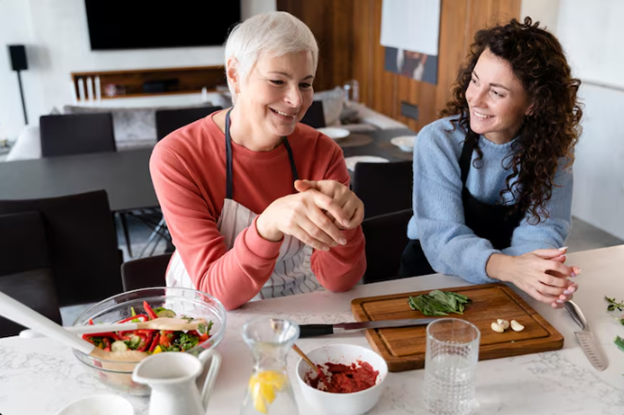
Imagine this: you’re sitting at your mother’s kitchen table, the same one you did homework on thirty years ago, and you gently bring up the subject of “maybe looking at some other living options.” Before you can finish your sentence, she shakes her head. “I’m not going anywhere,” she declares, and honestly? You kind kinda expected it. If you’ve had this talk, you’re not alone. Study after study shows that roughly 90% of seniors want to stay in their own homes as they age, referred to as aging in place, rather than move to assisted living or a smaller, “easier” place. It is not stubbornness. This is not denial. It is a fundamental human need to preserve identity, memory, and independence for as long as feasible.
But here’s the bit that most families miss: wanting to stay at home and being able to stay home so securely are two very different things. One is an emotion. The second is a plan. And narrowing that gap between the two is where the actual labor, and, frankly, the real love, begins for every family going through this stage together.
The Number That Surprises No One (But Should)
Let’s think about that 90% figure for a moment, because it doesn’t seem surprising at first glance. Of course, seniors prefer to stay at home. Who wouldn’t? It’s where they keep their positive memories, where the furniture is placed exactly how they like it, and where the neighbors know their names.
But Here’s the Twist
The important element is not the number itself, but rather what nearly no one does with it. Families nod and agree that aging in place is the objective, but then… they don’t plan for it. It becomes a passive wish rather than an active plan. That disconnect is precisely where things begin to go wrong, typically quietly, until they don’t.
Why Home Really Means Home
It’s tempting to dismiss this as “familiarity,” but that underestimates what’s going on emotionally with your aging parents.
It’s About Identity, Not Just Furniture
Home is where your father is still the man who fixes things, not the man who requires assistance. It’s where your mother continues to host Sunday dinners rather than attending them elsewhere. Staying at home protects a feeling of self, which is considerably more difficult to maintain in a foreign environment with unfamiliar rules.
It’s About Control
Independent living for seniors is more than simply a word; it evokes an emotion. Choosing what time to eat, when to nap, and where to sit. Moving eliminates countless minor decisions that people are unaware of until they are no longer present.
It’s About Community
The mail carrier who waves. The neighbor who checks in. The church group down the street. These unseen support structures around caring for aging parents do not follow them to a new zip code. They have built those over years, if not decades, and they discreetly do a lot of heavy lifting. Noting when something isn’t quite right, dropping by with a casserole, or simply being a familiar face on an otherwise regular Tuesday. Uproot the person, and you uproot the whole web of small, steady support around them too.
The Gap Nobody Talks About
So, if staying at home is such an obvious emotional benefit, why doesn’t everyone just… do it successfully?
Because desiring to stay and being prepared to stay are not the same. A home that was perfectly safe for a 45-year-old can gradually become dangerous for the same person at 80, with loose rugs, dim hallways, a shower with no grab bar, and stairs that looked fine for decades but suddenly don’t. This is the gap: the emotional decision is made quickly, but the practical preparation is postponed until “someday.”
And someday has a bad habit of arriving as an emergency room visit instead of a plan.
This is why senior home safety statistics often catch families off guard. Risks are rarely obvious. They build slowly in the background, while everyone assumes the house is “the same as it’s always been.” It is not. The house remained the same. The person who lives there did not.
What Staying Home Successfully Requires
If aging in place is your aim, the truth is that it requires more than just good intentions. It rests on three pillars.
A Physically Safe Environment
This means that the home, including the layout, lighting, flooring, and access points, is designed to accommodate an aging body, not merely a younger one who previously lived there.
A Support System of People
Not only repairs and features, but actual people: family members checking in, neighbors keeping an eye out, and perhaps a caretaker or two, all building a protective net around your loved one.
A Plan for Changing Needs
What works in 1970 may not work in the 2000s. Elderly parents at home require an evolving plan, one that anticipates the next stage rather than hurrying to respond to it as it occurs.
This Isn’t About Fear, It’s About Freedom
Here’s the mindset shift that changes everything: proactive elderly care does not imply assuming calamity is imminent. It’s about preserving the freedom your parents are trying to maintain. Every grab bar installed, every rug removed, and every difficult chat held early on is not an admission that something is amiss. They are investments in more enjoyable years at home, not fewer.
Consider it less like planning for the worst and more like paving the way for the best. Senior living options will always be there as a backup plan, but for most families, the real goal is simpler: assisting the ones who raised you to continue living exactly where they want to, for as long as it is truly safe to do.
Ready to Take the Next Step?
Go back to the kitchen table. Your mother shakes her head and says she’s not going anywhere. The most compassionate answer is to not dispute with her. It’s to ensure that when she says it, she means it: remaining at home is not just viable, but also genuinely and sustainably safe. That’s the real promise behind aging in place: not only remaining put, but staying well while you do so.
If this hit close to home, “Are Mom and Dad Safe?” by Peter J. Ottowitz is the practical, compassionate guide you need next, built for exactly this moment your family is facing right now. Grab a copy and start the conversation today.